Pain is never ever just a sign. It's a story that hides pathology, anxiety, memory, and risk. In emergency care and across medical method, the professionals who take care of discomfort well change end results: shorter remains, fewer complications, far better connection, and safer handovers. The catch is that great discomfort administration goes beyond choosing a medication course and dosage. It makes use of analysis structure, scene judgment, communication under stress, and a discipline for documentation that withstands audit or coroner's court. That is where targeted training, especially PUAEME008 Give discomfort administration, has actual weight.
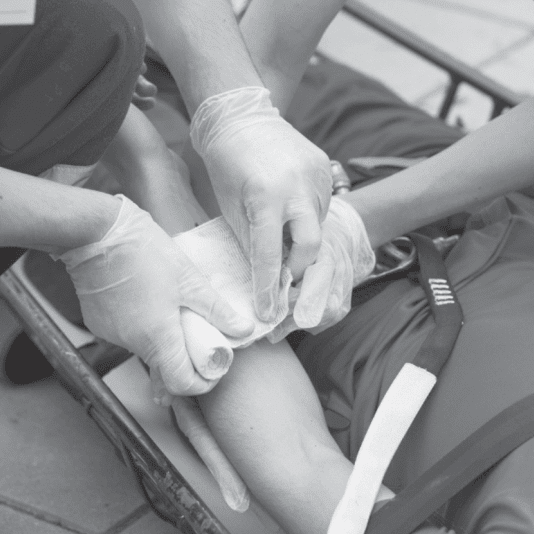
PUAEME008 rests inside the general public security domain and is commonly adopted in prehospital and emergency training. It is designed to offer -responders the skills to assess, carry out, keep track of, and paper analgesia within an organisation's scientific governance structure. If you're comparing discomfort monitoring programs, it assists to comprehend what this unit does well, where it fits relative to various other pathways, and just how to align it with your range of practice, be that paramedicine, nursing, physical rehabilitation, or event medicine.
What PUAEME008 really covers on the ground
The system concentrates on practical competencies mounted by procedures. At its core, PUAEME008 supply pain management shows responders to conduct structured analysis, select an analgesic or non-pharmacological strategy, administer securely, screen effects, and acknowledge damage or adverse responses. That reviews clean theoretically, but the field variation appears like this:
You kneel beside a 72-year-old who has dropped on actions, with a warped wrist and a BP of 98 systolic. She fears and hypothermic from the rain. You require a fast discomfort score, neurovascular checks, a sense of her comorbidities and meds, a respiratory tract appearance, and a choice on whether breathed in analgesia will certainly aid sufficient or if you need an IV plan. At the same time her little girl is asking about morphine and adverse effects. PUAEME008 gives you the structure to make that call and to escalate if red flags appear.
Expect the curriculum to include discomfort ranges for all ages, contraindications, side-effect management, and the logistics of authorization and documentation. The far better service providers also teach exactly how to make use of medical reasoning when the pain rating and the individual's affect don't match. Not all 8 out of 10 ratings are equivalent; a nervous young adult with a sprain requires a various conversation than a calm farmer with a thought fractured neck of femur.
Why this unit stands apart among pain monitoring courses
Dozens of discomfort management courses exist, from short refresher courses to postgraduate certifications. PUAEME008 is different due to the fact that it is built for activity under procedure. It lines up with organisational professional practice standards, not private short courses in pain management professional improvisation. That matters if you operate in a chain of care with medications stocked to policy, tools maintained to basic, and managed practice.
The device also emphasises emergency situation discomfort monitoring without losing sight of non-pharmacological steps. Splinting well, rearranging, heat or cold where suitable, and trained breathing can reduce the dose you need to deliver. In lots of solutions, this conservative skillset is the distinction between a smooth transportation and a screen full of alarms.
Finally, PUAEME008 carries defensible paperwork behaviors. Accurate discomfort scoring at standard and at established periods, clear medication charts, and rise notes decrease medical risk. When auditors or investigators examine an instance, they try to find that tale arc: evaluation, intervention, action, and handover clearness. The system trains you to compose that arc in real time.
Where PUAEME008 fits among discomfort management training courses
You can treat the present training landscape as 3 bands:
Entry and brief programs suffering monitoring: brief modules for first responders, sporting activities fitness instructors, and medical professionals new to analgesic methods. These typically educate discomfort scales, straightforward tool usage such as methoxyflurane inhalers, fundamental contraindications, and documentation. PUAEME008 generally beings in this band, though it is extra detailed than a two-hour webinar.
Intermediate certification training course suffering administration: multi-day programs focused on registered nurses, progressed initial responders, and allied health experts that need much deeper pharmacology, titration approaches, and much more complicated assessment including unique populaces. These commonly finish in a pain management certificate or pain administration accreditation that can be logged for CPD.
Advanced pain management accreditation course: postgraduate or specialized programs for anaesthetics, chronic discomfort facilities, and advanced paramedic practice. These include nerve blocks, multimodal regimens, and progressed surveillance. They are beyond the scope of PUAEME008 and target medical professionals with prescribing authority or expanded pain management workshops range under clinical direction.
For lots of teams that rely upon protocol-driven treatment, PUAEME008 supply pain monitoring strikes the pleasant spot: structured, recognised, sensible, and straight linked to field jobs. If your role is prehospital, event, mining, remote procedures, or severe ward setups without independent prescribing, it is an effective way to raise capability.
Pain administration training for registered nurses: when PUAEME008 aids and when it does n'thtmlplcehlder 34end. Nurses sit throughout a wide variety of scopes. A ward registered nurse in orthopaedics might not need prehospital packaging or scene take the chance of analysis, but will certainly benefit from the unit's emphasis on analysis framework, non-pharmacological actions, and escalation triggers. An ED nurse, rural generalist, or trip registered nurse stands to acquire more since the web content mirrors time-critical choice making. Two functional differences matter. First, medication authority. PUAEME008 instructs administration within procedure and regional standing orders, not independent prescribing. If your healthcare facility enables nurse-initiated analgesia under plan, the system's application, monitoring, and paperwork sections straighten well. Second, client mix. If you manage paediatric, senior citizen, or burns people regularly, see to it your company contextualises situations. Pain expression and pharmacodynamics shift with age, frailty, and injury type. For groups doing pain administration training for nurses, I have actually seen the best outcomes when teachers develop simulations around your actual medicine checklist and monitoring charts. Generic situations are tidy; local forms, genuine cart formats, and your barcode scanner operations make the learning stick. Pain administration training courses for physiotherapists: a customized view
Physiotherapists often require solid discomfort monitoring training, yet not mostly for medication management. Instead, they need evaluation subtlety, secure manual handling when pain is severe, and non-pharmacological approaches that lower fear-avoidance and safeguard cells. A short training course developed around PUAEME008 material can be helpful if the provider converts procedures into technique you have: supporting, splinting, positioning, rated exposure, and communication that verifies pain while approaching function.
If you work in sports, bone and joint, or post-op rehab, ask companies to consist of choice factors relevant to you. For example, when to advocate for analgesia before mobilisation, what to check after regional blocks, and just how to train breathing and pacing to make analgesia more reliable. In some systems, physio therapists may be allowed to assist with inhaled anesthetics throughout transportations or on-field stabilisation under supervision. Where that exists, PUAEME008-aligned training includes safe structure.
What a strong PUAEME008 course looks like
The device descriptor is only the skeleton. The real high quality originates from shipment. Over the last decade, a couple of functions have continually forecasted good student end results:
- Scenario thickness that requires judgment, not simply rote steps. Two scenarios per hour is a good criteria, with advancing vitals and household dynamics. Medication handling that mirrors your setting. If your service lugs methoxyflurane and intranasal fentanyl, you must practice with the exact devices, consisting of arrangement, priming, disposal, and wastage documentation. Feedback loopholes on communication. Pain is subjective. Good training courses tape-record a situation and play back 60 seconds of just how you clarified options and consented to treatment. A lot of clinicians boost after seeing their very own words. Explicit red flag training. New-onset neurological deficiencies, developing stomach pain with peritonism, area disorder indications, and irregular MI. A program that drills these patterns cuts mistakes months later. Documentation drills under time pressure. Five-minute write-ups that still catch standard score, website, descriptors, interventions, feedback at two periods, and adverse results, plus who you intensified to and when.
If a provider skimps on any one of these, you may leave with understanding however without reflexes. Discomfort management is a time game, and just repeating constructs speed without sloppiness.
Assessment approaches you must expect
Competency-based analysis is the norm. Composed parts test pharmacology, contraindications, and policy recognition. Practical assessments typically involve 2 or even more simulated clients with various analgesic needs and comorbidities. You will certainly be racked up on assessment thoroughness, medication checks, application accuracy, monitoring, adverse reaction response, and paperwork completeness. Excellent assessors likewise challenge soft skills: describing choices to a baffled senior, negotiating with a risk-averse family member, and maintaining self-respect while you subject and check out agonizing areas.
A well-run final circumstance frequently includes a curveball, such as hypotension after standing, an allergic reaction you didn't evoke up until late, or an abrupt decrease in GCS. The point is to evaluate exactly how rapidly you abandon Strategy A and switch to helpful treatment, speak with, or transport prioritisation.
Scope and law: the borders that shield you
A relentless false impression is that a discomfort administration certification gives wide medication rights. It doesn't. PUAEME008 rests inside organisational administration. Your authority streams from plan, neighborhood medicines regulation, and the delegation or standing orders you run under. If your service permits breathed in analgesia without IV access, that is your lane. If the protocol requires a second medical professional to verify application, that is not optional.
Why emphasise this? Because when instances go wrong, the initial concerns are always concerning authority and protocol compliance. A discomfort administration qualification training course should make you well-versed in your limits. Paradoxically, that fluency usually increases your performance. You recognize when to push for rapid transport, when to require innovative back-up, and just how to use non-pharmacological approaches while you wait.
The sensible pharmacology that matters
PUAEME008-aligned programs commonly cover a limited analgesic embed in deepness instead of a vast menu in superficial information. Most services educate at least one inhaled representative and one opioid path. The details differ by territory, yet the theoretical supports are stable.
Methoxyflurane or similar inhaled agents are fast to release, non-invasive, and practical for step-by-step discomfort or short transports. They can be inadequate for serious injuries and require monitoring for lightheadedness or hypotension. Opioids such as intranasal fentanyl or IV morphine supply titratable alleviation yet include respiratory system and sedation risks that require vigilance, specifically in older adults or those with obstructive rest apnoea. Paracetamol and NSAIDs are typically part of a multimodal strategy however have slower beginning and specific contraindications like renal problems or bleeding risk.
Good training attaches the dots between mechanism, onset, optimal, and individual account. For instance, you discover why an anxious youngster with a lower arm crack might endure intranasal fentanyl much better than a cannula, and why a sickly older with a neck of thigh crack requires careful titration with early antiemetic cover.
Non-pharmacological techniques that minimize dose and risk
Pain administration courses often treat non-drug actions as an afterthought. That is a blunder. Splinting placement lowers nociceptive drive. Warmth and positioning stabilize vitals and comfort. Assisted breathing and emphasis strategies reduced understanding load and make anesthetics more efficient. In paediatrics, disturbance is not adorable window clothing; it minimizes the called for dose and frequently establishes whether a treatment prospers without escalation.
In my own practice, the time you spend on a great splint more than spends for itself. A well-moulded vacuum cleaner splint on a tib-fib crack can go down a discomfort score by 2 points before any medicine begins, which then makes the very first dose work much better. Training courses that construct in hands-on splint technique and positioning for breast injuries or abdominal pain equip you to see that payoff.
Emergency discomfort administration under uncertainty
Complex scenes do not wait until you finish your kind. You will in some cases dose prior to you understand the full tale. The risk-free method to do that is to use traditional initial application, pick faster-off representatives when diagnosis is unclear, and keep your surveillance simple however constant. That indicates audible respiratory system price checks, not just a pulse oximeter analysis. It implies reassessing discomfort ratings after every meaningful action, not after drugs.
Edge situations matter. A patient with drunkenness and a head injury can not inform you much; your analgesia has to not mask wear and tear. A presumed area disorder must set off marginal adjustment and very early speak with. A postpartum patient with stomach pain needs a various differential than a young man with comparable vitals. Great programs appear these nuances rather than teaching a neat, straight algorithm that fact will never follow.

Documentation that protects care and careers
If you keep in mind absolutely nothing else from the governance part of a discomfort administration certificate training course, remember this pattern: standard assessment, treatment, action, escalation or handover. Create them because order, with times. Keep in mind confounders like pre-arrival meds or intoxication. Use the pain range consistently and talk with function, not simply numbers. "Pain 8/10, incapable to weight-bear. After intranasal fentanyl 50 mcg, pain 5/10, endures splint and transfer." These sentences help the obtaining clinician proceed the plan without repeating the job or overdosing.
The most typical documentation voids I see are missing out on 2nd monitorings and undocumented unfavorable effects. Build a muscle mass memory for keeping in mind action at 5 to 10 mins relying on agent, and for tape-recording what you did regarding queasiness or pruritus, also if that activity was simply placing, oxygen, or a call to the on-call clinician.
How to pick between pain administration programs for your role
If you are sorting with discomfort monitoring training courses and you require a quick means to narrow options, ask three concerns. What medications and tools will I really make use of in my setting, and does the course teach those? Just how much of the program time is hands-on with situations that match my people? What acknowledgment or placement does the training course have with my service procedures or regulatory requirements?
PUAEME008 Give pain management often ratings well on these examinations because it is developed to be supplied with the equipment and plans you will certainly come across. If you operate in a health center, search for companies who map PUAEME008 outcomes to your nurse-initiated medicines policy. If you are a physiotherapist or allied wellness specialist, search for a version that emphasises assessment and non-pharmacological methods while orienting you to how to support for analgesia within your team.
How PUAEME008 elevates early-career clinicians
Early in an occupation, the largest jump is from textbook certainty to real-time judgment. PUAEME008 increases that shift forcibly choices under time restrictions with supervision and comments. You learn to hold 2 thoughts simultaneously: ease discomfort and protect diagnostic clearness. That double focus builds integrity with coworkers and count on with individuals. I have actually viewed jr -responders who trained under robust programs deal with busy, noisy scenes without misplacing keeping track of periods, and that steadiness translates into safer transportations and far better handovers.
The system also builds common language. When everyone utilizes the same discomfort scales, the exact same application varieties, and the exact same handover structure, groups move much faster. Experienced clinicians recognize that a common psychological model decreases error greater than any kind of single device.
For organisations: embedding PUAEME008 into practice
Training does not stick unless managers make space and provide devices. If you oversee a group, 3 investments raise the return on a provide pain administration program. Stock the devices and meds the training course shows, in the same setups. Audit documents for the initial three months after training and feed back patterns, not criticize. Arrange short situation refreshers every quarter that recycle typical injuries and one rare however harmful pattern, such as aortic dissection impersonating as bone and joint pain.
You will see the society change in exactly how your team discuss pain. They will certainly ask for splints sooner, check neurovascular condition much more continually, and table truthful discussions regarding when to escalate. That kind of muscle memory is what individuals really feel when they state treatment really felt alert and calm.
Where brief courses suffering administration fit into lengthy careers
A short training course does not end the discovering journey. Over a job, you will certainly include pieces: sedation for treatments, local blocks if your range increases, advanced monitoring, and more nuanced communication with intricate pain syndromes. Yet a solid foundation issues. The certificate program hurting administration you take now should offer you a framework sturdy sufficient to hang new expertise on without damaging old habits.
PUAEME008's role, for several, is to establish that structure: analyze, choose, carry out, keep an eye on, and file, with rise woven through each step. That isn't glamorous. It is dependable. When patients injured and time is limited, integrity is what you want in your hands.
A practical roadmap to get started
If you are ready to relocate, map the actions as opposed to buying at random.
- Confirm your extent and requires with your scientific lead or manager, consisting of which medications and courses remain in play. Shortlist providers who clearly supply PUAEME008 Provide discomfort management and request for their circumstance mix and tool list. Book with an accomplice from your team if possible, so you educate on the same kinds and debrief together afterward. After training, established a 90-day testimonial to investigate a small example of situations for discomfort assessment high quality, application accuracy, and 2nd observations. Plan a short refresher situation every quarter, turning unique populations like paediatrics, older adults, and injury with shock.
That cadence keeps skills from fading and confirms to your administration bodies that training translates into practice.
The end result that matters
Pain monitoring is not a particular niche skill. It is a core medical pledge. A client may neglect the numbers on a graph, yet they bear in mind whether somebody took their pain seriously, explained options, and remained present as relief set in. When you pick a pain administration program that stabilizes pharmacology with judgment, and when you embed PUAEME008 concepts into regular care, your technique becomes extra humane and a lot more defensible. That is the uncommon win where the patient's story and the organisation's risk account relocate the exact same direction.